




.jpg)
Mangroves are one of the most effective natural barriers against plastic pollution. Their complex root systems physically trap waste carried by rivers, tides and currents, while the surrounding sediment can also capture and bury smaller plastic particles, including microplastics.
This is something Seven Clean Seas recognised when we started working in mangrove areas. The amount of plastic found in mangrove forests can be massive. And when left alone, the waste builds up over time. Much of it becomes trapped between the roots or buried beneath layers of sediment, meaning the true scale of the problem can easily be overlooked. In just one day, our team can collect over 1,000 kg of plastic from a single mangrove area.

This shows that the same root systems that make mangroves such effective natural barriers also make them highly vulnerable to plastic pollution. If mangroves protect our coastlines by trapping plastic, who protects the mangroves?
How plastic gets trapped in the first place
Most of the plastic pollution found in mangroves actually originates from somewhere else. Waste that is discarded on land or escapes from collection systems can be carried by rainfall, drains or rivers towards coastal waters. From there, it gets pushed into estuaries and mangrove forests.
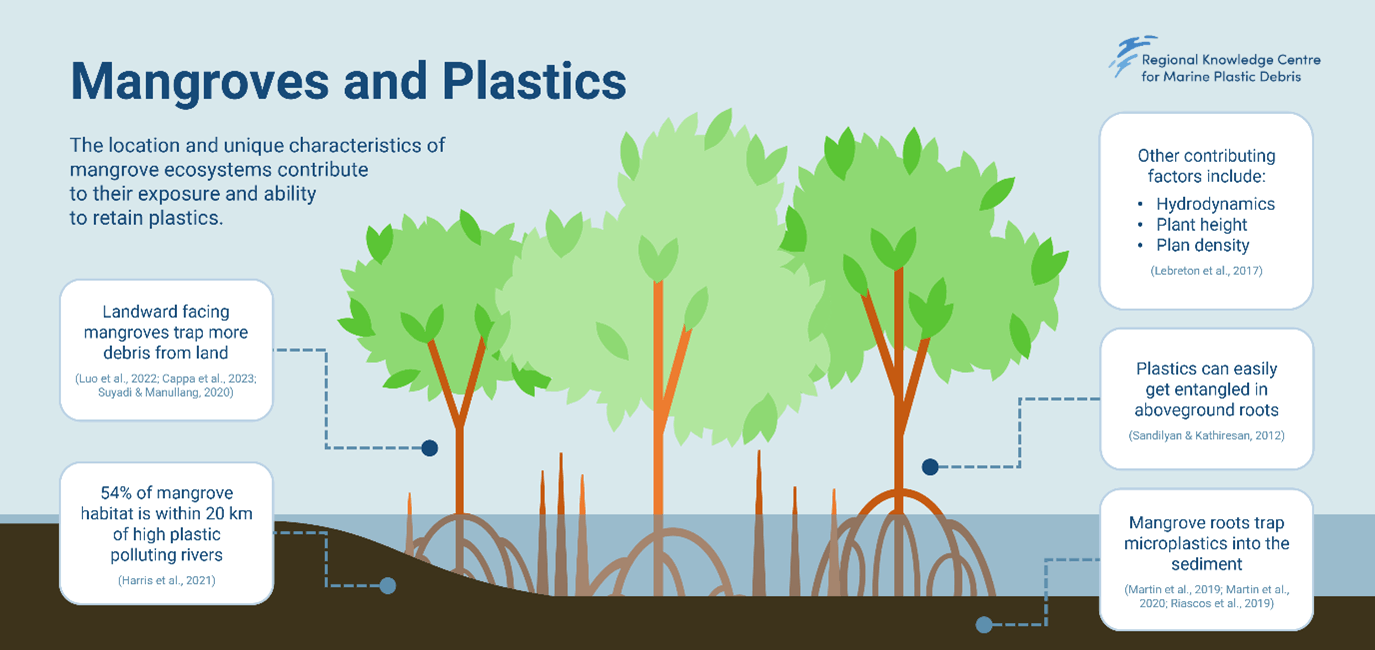
Research in Thailand illustrates how deeply this pollution gets embedded. Sunlight, heat, waves and physical abrasion gradually weaken larger plastic items and break them into microplastics. These small fragments then settle into mangrove mud and become mixed with layers of sediment. A study in the Samut Songkhram province detected microplastics in mangrove sediment at depths of up to 142 centimetres. It was also found that sheltered mangrove and community-facing areas generally contain more microplastics than open, sea-facing spots. This supports the idea that mangrove forests can preserve a longer record of plastic pollution.
The same findings were present in Indonesia: microplastics mixed in mangrove and mudflat sediment layers.Researchers described these sediments as plastic sinks that could provide a historical record of pollution over time.
What happens when plastic accumulates in mangroves?
According to UNEP, mangroves are present across more than 120 countries and cover approximately 15 million hectares globally.
On average, they can store around 1,000 tonnes of carbon per hectare in their plants and underlying soil.They serve as nursery, feeding and shelter areas for many fish and shellfish species. And their roots reduce the impacts of waves, floods, erosion and storms,making healthy mangroves valuable to both ecosystems and coastal communities.
But when plastic continually accumulates between the roots, this protective structure can become a pollution hotspot. Ropes, nets and heavy waste can physically damage vegetation, while layers of mixed debris reduce the quality of habitats used by fish, crabs, birds and reptiles. Roots and sediment get covered, affecting oxygen exchange and the movement of water.
UNEP warns that plastic covering mangrove areas run the risk of restricting oxygen and disrupting the wider food web, harming wildlife and influencing the livelihoods of those that depend on healthy fisheries.
What we’re doing to address plastic pollution in Bang Kachao: Bangkok's Green Lung
Throughout our global projects, Seven Clean Seas recognised that marine plastic doesn't accumulate only on or near open beaches. Large amounts of waste is constantly trapped in rivers, tidal zones and mangrove areas, where the pollution is often less visible and much more difficult to remove.
In Thailand, Seven Clean Seas initially focused on intercepting floating waste using the HIPPO - our waste-collection vessel operating in the intertidal area beside Wat Chak Daeng.
However, floating plastic is only one part of the problem. Once waste leaves the main river flow, it can become trapped in nearby tidal and mangrove areas, which is why we expanded our activities to include regular manual collection in mangrove and tidal areas in Samut Prakan. Our team enters areas that cannot be reached by the HIPPO and removes waste that has become tangled between roots, buried in mud or pushed deeper into the vegetation.

How you can protect mangroves every day
Mangroves protected coastlines, stored carbon and supported wildlife long before plastic pollution became a global problem. Their natural ability to trap material should not turn them into permanent storage areas for our waste.
So to protect mangroves requires action at different stages of the plastic journey. As individuals, we can reduce unnecessary single-use products, choose reusable or refillable alternatives and make sure our waste is disposed of through proper collection systems.
Businesses can identify unnecessary plastic across their products, packaging and operations. They can redesign packaging, introduce reusable or refillable systems, improve waste segregation and support collection infrastructure in areas with lack of waste management.
Governments and municipalities also play an essential role. Individual action cannot replace properly functioning waste-management systems. Reliable household collection, controlled disposal facilities, improved drainage, river interception and stronger enforcement against illegal dumping are all needed to prevent plastic from moving where it’s not meant to be.
And at the same time, plastic that has already reached mangrove areas still needs to be recovered. By supporting collection and interception projects like ours, businesses and communities can help remove existing pollution while longer-term prevention systems are strengthened.
If you’re interested in supporting mangrove protection and plastic recovery,get in touch with us at hello@sevencleanseas.com.