

20 September 2026

Cleaning Up The Ocean Isn't Enough to Solve Plastic Pollution. What's Next?

By:
Jenny hutagaol
The future of tomorrow: youth engagement in the coastal communities where we operate is a crucial part of holistic waste management

World Cleanup Day is an annual initiative to combat waste mismanagement, including ocean and marine plastic. Each year on September 20th, this global movement brings together around 25 million participants from 190 countries to work on activities such as beach cleanups, plogging routes, composting, and waste audits, aiming to tackle waste and accelerate the circular economy.

Massive participation in cleanups is no surprise. In a joint study, participants chose beach cleanups over coastal walks and rockpooling (exploring species in pools of water) as their favourite beach activity. People tend to feel a sense of responsibility for the environment, which encourages them to do more. On top of that, much research has found that spending time in nature improves the mood, calms anxiety, improves breathing and physical health, increases concentration, and helps recharge.

But while cleanup is good, we can't stop there.

Alone, it cannot effectively solve the waste and plastic problem, so we need to think about what happens after waste is collected. A study published in the journal, Waste Management, found that localised litter returns to urban areas within 7 days due to structural design flaws such as overflowing recycling bins.

A cleanup helps remove waste that has already entered the environment But there is also an opportunity to understand where waste comes from, why it keeps appearing in the same place that is consistently cleaned, and what can be done to prevent it from ending up there in the first place.

As World Cleanup Day has shifted to focus more on the circular economy, it is also worth looking at cleanups as a way to better understand the waste problem itself.

Why waste keeps appearing on our beaches

There is a significant amount of scientific research that confirms  waste rapidly accumulates again after a cleanup if upstream (or the source of the plastic issue) is not shut off. Environmental scientists and marine debris experts refer to this phenomenon as re-accumulation rates of the leaky faucet problem.

Plastic waste continuously leaks into aquatic environments at a global rate of over 50 million metric tons per year, and localised cleanup areas do not stay clean. It continues to reappear after clean-up operations due to a combination of upstream inflows, capacity limits, environmental transport mechanisms, and behavioural factors.

  1. Unstopped Upstream Inflows: Clean-up technologies are downstream solutions that address plastic already in the environment. Without aggressive upstream intervention (like reducing plastic production or product substitution) new plastic will continue to enter ecosystems and waterways faster than existing efforts can collect it. In areas with high waste mismanagement, such as Batam, Indonesia, a Seven Clean Seas’ river barrier can prevent about 400 kg of plastic waste from entering the ocean every day.
  2. Plastic Production: Clean-up operations struggle to match the growth rate of global plastic production. Research cited in the source indicates that deploying 200 oceanic clean-up devices would have only a modest impact on floating ocean plastics given current production trends.
  3. Subsurface and Substrate Reservoirs: Many clean-up technologies are limited to collecting surface litter. Waste buried in coastal sediments, beaches, or deeper water columns resuspends, shifts, and washes back onto cleaned shorelines and surface waters over time.
  4. Public Perception and Behavioural Risks: The visibility of clean-up technologies can misrepresent downstream removal as a complete solution, distracting people from source reduction. Observing automated or robotic clean-up devices can also weaken the behavioural deterrent against littering, leading people to continue generating waste under the assumption that machines will remove it.

What we know about plastic on the beach

Researchers often use a method called a 'waste transect' to know how much plastic ends up at the beach - and what type. During the survey, researchers establish a standardised line (usually 100 meters) parallel to the shoreline or within a specific area. They then collect, weigh, and categorise all human-made debris ( macro-debris greater than 2.5 cm) within the designated boundary.

At the top or government level, these kinds of findings enable policymakers to design targeted environmental regulations, evaluate policy effectiveness, and optimise local waste management infrastructure. They can also be used to pressure businesses to switch to sustainable packaging.
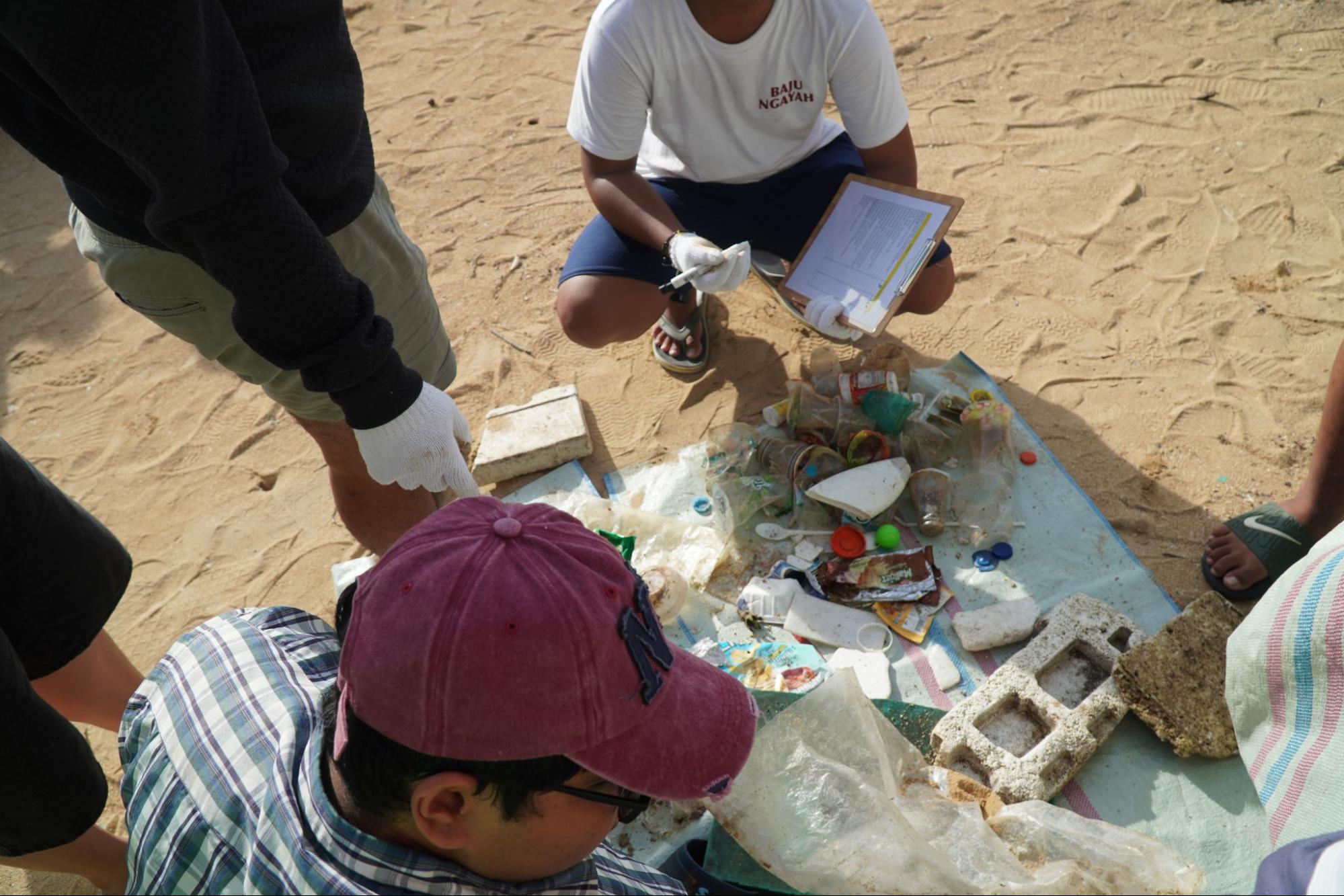
At the end of every Seven Clean Seas beach cleanup, we conduct a waste research exercise activity with participants.

Why cleanup alone isn’t enough

Understanding why waste keeps coming back and paying attention to what is collected help us to see why cleanup and prevention need to come hand-in-hand. Cleanup matters because we need to remove plastic waste already in the environment. Leaving it there makes the problem worse, as plastic breaks down into smaller pieces over times, moves further through waterways and currents, or gets consumed by animals.

But cleanup is a downstream solution.

If the same amount of waste continues to be generated, we will always need to clean up what leaks into the environment. This is why prevention needs to happen at the same time. And it doesn’t always mean asking individuals to simply “use less plastic.” The way products are designed, packaged, sold, collected, and managed after use all influence what eventually becomes waste.

This is where the information collected during cleanups becomes useful. If we know what types of waste are repeatedly found in a particular area, we have a better starting point for addressing what needs to change.

What does the circular economy have to do with cleanups?

Our current system is still largely linear.

We take resources, make products, use them, and - more often than not - throw them away. Once something becomes trash, many act as if the problem doesn’t exist because it's out of their hands. But that waste still goes somewhere. And when waste management systems aren't built to properly handle and process trash, some of it can eventually end up in rivers, beaches, and the ocean.

The circular economy looks at how we can keep products and materials in use for as long as possible through approaches such as reuse, repair, recycling, and better product design. This means looking at the whole journey of a product, from the resources used to make it, to how it is designed and used, and finally to what happens when it is no longer wanted.

So, where does cleanup fit into this?

When we remove plastic from a beach, river, or other environment, we are recovering material that would otherwise remain in the environment. Beyond that, there are still questions left unanswered. Can it be reused or recycled? Is there an existing system that can properly manage it? Why did it become waste in the first place? And if we keep finding the same type of plastic during cleanups, what can we change to stop it from entering the environment again?

Thinking about these, we look at cleanup differently. Instead of seeing a cleanup as an activity where we collect as much waste as possible, we can also use it as an opportunity to understand the waste system around us. The waste we find tells us a lot about consumption, waste management, product design, and even the gaps in the systemt. In the end, collecting and looking at the data behind cleanups are just as important as the cleanups themselves.

See how Seven Clean Seas helps coastal communities move beyond cleanups, implementing holistic waste management systems and circular economy practises.


Let's Talk Impact!

Get in touch to see how we can create a data-driven strategy that scales your brand.
Get in touch to see how we can create a data-driven
strategy that scales your brand.
Let's Talk

Cleaning Up The Ocean Isn't Enough to Solve Plastic Pollution. What's Next?

September 20, 2026
·
by
Jenny hutagaol
·
x min read
The future of tomorrow: youth engagement in the coastal communities where we operate is a crucial part of holistic waste management

World Cleanup Day is an annual initiative to combat waste mismanagement, including ocean and marine plastic. Each year on September 20th, this global movement brings together around 25 million participants from 190 countries to work on activities such as beach cleanups, plogging routes, composting, and waste audits, aiming to tackle waste and accelerate the circular economy.

Massive participation in cleanups is no surprise. In a joint study, participants chose beach cleanups over coastal walks and rockpooling (exploring species in pools of water) as their favourite beach activity. People tend to feel a sense of responsibility for the environment, which encourages them to do more. On top of that, much research has found that spending time in nature improves the mood, calms anxiety, improves breathing and physical health, increases concentration, and helps recharge.

But while cleanup is good, we can't stop there.

Alone, it cannot effectively solve the waste and plastic problem, so we need to think about what happens after waste is collected. A study published in the journal, Waste Management, found that localised litter returns to urban areas within 7 days due to structural design flaws such as overflowing recycling bins.

A cleanup helps remove waste that has already entered the environment But there is also an opportunity to understand where waste comes from, why it keeps appearing in the same place that is consistently cleaned, and what can be done to prevent it from ending up there in the first place.

As World Cleanup Day has shifted to focus more on the circular economy, it is also worth looking at cleanups as a way to better understand the waste problem itself.

Why waste keeps appearing on our beaches

There is a significant amount of scientific research that confirms  waste rapidly accumulates again after a cleanup if upstream (or the source of the plastic issue) is not shut off. Environmental scientists and marine debris experts refer to this phenomenon as re-accumulation rates of the leaky faucet problem.

Plastic waste continuously leaks into aquatic environments at a global rate of over 50 million metric tons per year, and localised cleanup areas do not stay clean. It continues to reappear after clean-up operations due to a combination of upstream inflows, capacity limits, environmental transport mechanisms, and behavioural factors.

  1. Unstopped Upstream Inflows: Clean-up technologies are downstream solutions that address plastic already in the environment. Without aggressive upstream intervention (like reducing plastic production or product substitution) new plastic will continue to enter ecosystems and waterways faster than existing efforts can collect it. In areas with high waste mismanagement, such as Batam, Indonesia, a Seven Clean Seas’ river barrier can prevent about 400 kg of plastic waste from entering the ocean every day.
  2. Plastic Production: Clean-up operations struggle to match the growth rate of global plastic production. Research cited in the source indicates that deploying 200 oceanic clean-up devices would have only a modest impact on floating ocean plastics given current production trends.
  3. Subsurface and Substrate Reservoirs: Many clean-up technologies are limited to collecting surface litter. Waste buried in coastal sediments, beaches, or deeper water columns resuspends, shifts, and washes back onto cleaned shorelines and surface waters over time.
  4. Public Perception and Behavioural Risks: The visibility of clean-up technologies can misrepresent downstream removal as a complete solution, distracting people from source reduction. Observing automated or robotic clean-up devices can also weaken the behavioural deterrent against littering, leading people to continue generating waste under the assumption that machines will remove it.

What we know about plastic on the beach

Researchers often use a method called a 'waste transect' to know how much plastic ends up at the beach - and what type. During the survey, researchers establish a standardised line (usually 100 meters) parallel to the shoreline or within a specific area. They then collect, weigh, and categorise all human-made debris ( macro-debris greater than 2.5 cm) within the designated boundary.

At the top or government level, these kinds of findings enable policymakers to design targeted environmental regulations, evaluate policy effectiveness, and optimise local waste management infrastructure. They can also be used to pressure businesses to switch to sustainable packaging.

At the end of every Seven Clean Seas beach cleanup, we conduct a waste research exercise activity with participants.

Why cleanup alone isn’t enough

Understanding why waste keeps coming back and paying attention to what is collected help us to see why cleanup and prevention need to come hand-in-hand. Cleanup matters because we need to remove plastic waste already in the environment. Leaving it there makes the problem worse, as plastic breaks down into smaller pieces over times, moves further through waterways and currents, or gets consumed by animals.

But cleanup is a downstream solution.

If the same amount of waste continues to be generated, we will always need to clean up what leaks into the environment. This is why prevention needs to happen at the same time. And it doesn’t always mean asking individuals to simply “use less plastic.” The way products are designed, packaged, sold, collected, and managed after use all influence what eventually becomes waste.

This is where the information collected during cleanups becomes useful. If we know what types of waste are repeatedly found in a particular area, we have a better starting point for addressing what needs to change.

What does the circular economy have to do with cleanups?

Our current system is still largely linear.

We take resources, make products, use them, and - more often than not - throw them away. Once something becomes trash, many act as if the problem doesn’t exist because it's out of their hands. But that waste still goes somewhere. And when waste management systems aren't built to properly handle and process trash, some of it can eventually end up in rivers, beaches, and the ocean.

The circular economy looks at how we can keep products and materials in use for as long as possible through approaches such as reuse, repair, recycling, and better product design. This means looking at the whole journey of a product, from the resources used to make it, to how it is designed and used, and finally to what happens when it is no longer wanted.

So, where does cleanup fit into this?

When we remove plastic from a beach, river, or other environment, we are recovering material that would otherwise remain in the environment. Beyond that, there are still questions left unanswered. Can it be reused or recycled? Is there an existing system that can properly manage it? Why did it become waste in the first place? And if we keep finding the same type of plastic during cleanups, what can we change to stop it from entering the environment again?

Thinking about these, we look at cleanup differently. Instead of seeing a cleanup as an activity where we collect as much waste as possible, we can also use it as an opportunity to understand the waste system around us. The waste we find tells us a lot about consumption, waste management, product design, and even the gaps in the systemt. In the end, collecting and looking at the data behind cleanups are just as important as the cleanups themselves.

See how Seven Clean Seas helps coastal communities move beyond cleanups, implementing holistic waste management systems and circular economy practises.

More deep and cool content