

Ocean Talk

When Plastic Becomes Rock and Smog: The Rise of Plastiglomerates, Plasticrust, Pyroplastic and Plastic Smog

LET’S TALK IMPACT
Get in touch to see how we can create a data-driven
strategy that scales your brand.
Let's Talk
What is a plastiglomorate?
Plastiglomerate

Plastic is one of the most versatile materials on earth that can be shaped into various solid forms due to its plasticity. Its light, durable, and endlessly moldable characteristic makes it dangerously adaptable. Even in the planet’s most extreme conditions, plastic doesn’t vanish and merge into one with the environment.

Recent research shows that plastic can withstand scorching heat, freezing cold, high salinity, and even radiation because of their molecular resilience. Their long carbon chains and chemical stability make them resistant to degradation. Rather than breaking down, plastic transforms into new materials that mimic natural elements.

In fire, plastic melts and fuses into stone. In ice, plastic freezes into time capsules, while in saltwater, it grows into crusts like coral. They always transform to turn into other forms but never disappear. 

Plastic isn’t just everywhere but it’s everything now. Let’s what happens when plastic doesn’t just pollute the planet but becomes part of it.

When Plastic Survives Fire and Becomes Rocks

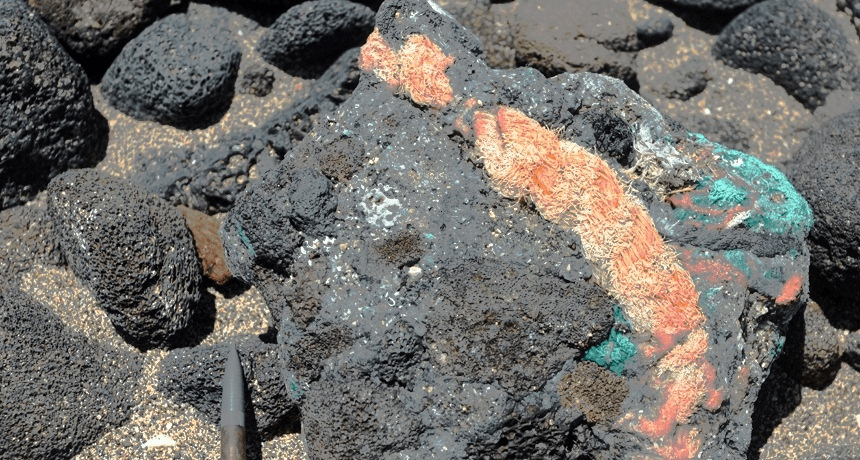
Recently, Indonesian researchers reported on plastiglomerate and other types of plastic such as, plasticrusts and pyroplastic were found from an island beach in the Java Sea due to uncontrolled burning of plastic waste.

First discovered in 2006 on Kamilo Beach, Hawaii, Plastiglomorate is described as a mixture of molten plastic fused with natural and artificial debris. Scientists categorised it into two main types: clastic plastiglomerate and in-situ plastigomerate. Clastic plastiglomerate appears as scattered loose sediment lying on the beach surface while in-situ plastiglomerate is formed when molten plastic fills the fractures and vesicles of rocks, bonding permanently with them.
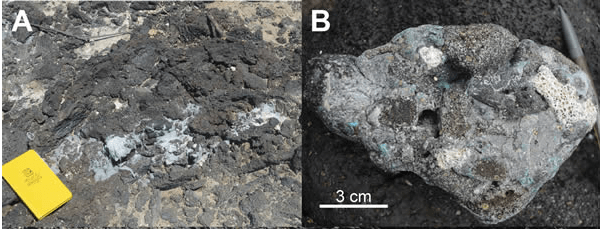
Plastic pollution and types of plasticglomerates
(A) Clastic Plastiglomerate (B) In-situ Plastiglomerate

Pyroplastic and plasticrusts are subtypes of plastiglomerate. Pyroplastics are melted or burned plastics that have lost their original shape and color and sometimes resemble natural rocks. They form with minimal added material, their density remains low where light enough to float in seawater. On the other hand, Plasticrusts are crust-like layers that adhere tightly to rock surfaces, almost like barnacles or algae growths.

Plastic Sleeps Beneath Ice

In freshly fallen Antarctic snow scientists have found up to 3,000 microplastic particles per liter of meltwater, most thinner than a human hair. Each fragment slightly darkens the snow, lowering its albedo, the natural ability to reflect sunlight and accelerating glacier melt.

Across the planet’s other pole, the Arctic cryosphere, including its snow, glaciers, permafrost, and sea ice  has also become both a sink and source of microplastics. According to recent research, Arctic snow can contain as many as 14,000 particles per liter, while sea ice stores over 10¹⁹ microplastic fragments, releasing billions more each year as it melts. These plastics arrive not from local waste, but from winds, rivers, and ocean currents carrying them from distant continents.

We Breathe Plastic

When plastic survives the harshness of the sea, it begins to fragment and form plastic smog. Plastic smog refers to marine pollution caused by plastic particles that have entered the ocean. Over time, plastic waste that flows into the sea breaks down into smaller particles and gradually covers the sea from the surface to the ocean floor, resembling the smog phenomenon in the atmosphere.
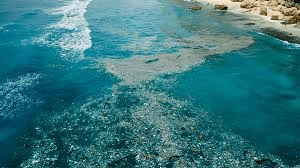
Plastic smog and marine plastic pollution
Plastic Smog

In March 2023, this issue resurfaced with a research paper titled “Growing Plastic Smog”. This study estimated that as of 2019, 171 trillion plastic particles or equal to 2.3 millions tons are floating in oceans worldwide.This smog of plastic fills the entire marine ecosystem and turns the blue ocean into murky water.

What Does This Mean For Us?

This shift is a sign of a failed prevention system and not a mere sign of pollution. Because our pollution has evolved into something geological, the next thing we need to anticipate is no longer where plastic goes but also what it becomes next.
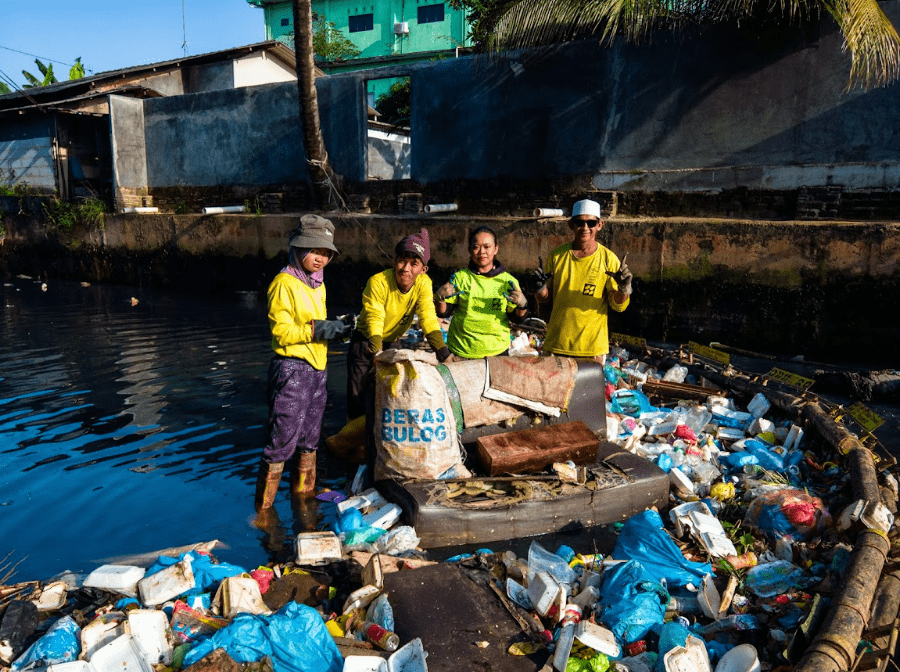
A Seven Clean Seas river barrier stopping plastic pollution in Indonesia
A SCS river barrier in one of our plastic recovery projects in Indonesia

Seven Clean Seas (SCS) work to stop plastic before it ever reaches the most extreme place in the world and transform the valuable plastic into unrecyclable material, starting with household collection, river interception and coastal recovery.

The same polymers we capture from Bintan, Batam, Thailand, and Bali are now found in completely different forms in Indonesia, Hawaii, and the wildest part of the world. Your support makes this possible. By helping us recover plastic where it begins, you protect not just our coastlines, but the planet’s most remote and fragile places.

Join us or contribute to our meaningful projects, because if even Antarctica can’t escape plastic, the time to act is now.


Related Articles

When Plastic Becomes Rock and Smog: The Rise of Plastiglomerates, Plasticrust, Pyroplastic and Plastic Smog

Ocean Talk
November 28, 2025
Read
Read
November 28, 2025

Third-Party Verification: Ensuring transparency and accountability

Business Talk
May 4, 2023
Read
Read
May 4, 2023

Embracing Sustainability: How Companies Can Drastically Reduce Plastic in the Food & Beverage Industry

Resources
Data, statistics, and actionable strategies businesses can implement to make a substantial difference in plastic reduction and contribute to a greener future.
June 1, 2023
Read
Read
June 1, 2023
Ocean Talk

When Plastic Becomes Rock and Smog: The Rise of Plastiglomerates, Plasticrust, Pyroplastic and Plastic Smog

November 28, 2025
·
by
Jenny Hutagaol
·
x min read
What is a plastiglomorate?
Plastiglomerate

Plastic is one of the most versatile materials on earth that can be shaped into various solid forms due to its plasticity. Its light, durable, and endlessly moldable characteristic makes it dangerously adaptable. Even in the planet’s most extreme conditions, plastic doesn’t vanish and merge into one with the environment.

Recent research shows that plastic can withstand scorching heat, freezing cold, high salinity, and even radiation because of their molecular resilience. Their long carbon chains and chemical stability make them resistant to degradation. Rather than breaking down, plastic transforms into new materials that mimic natural elements.

In fire, plastic melts and fuses into stone. In ice, plastic freezes into time capsules, while in saltwater, it grows into crusts like coral. They always transform to turn into other forms but never disappear. 

Plastic isn’t just everywhere but it’s everything now. Let’s what happens when plastic doesn’t just pollute the planet but becomes part of it.

When Plastic Survives Fire and Becomes Rocks

Recently, Indonesian researchers reported on plastiglomerate and other types of plastic such as, plasticrusts and pyroplastic were found from an island beach in the Java Sea due to uncontrolled burning of plastic waste.

First discovered in 2006 on Kamilo Beach, Hawaii, Plastiglomorate is described as a mixture of molten plastic fused with natural and artificial debris. Scientists categorised it into two main types: clastic plastiglomerate and in-situ plastigomerate. Clastic plastiglomerate appears as scattered loose sediment lying on the beach surface while in-situ plastiglomerate is formed when molten plastic fills the fractures and vesicles of rocks, bonding permanently with them.

Plastic pollution and types of plasticglomerates
(A) Clastic Plastiglomerate (B) In-situ Plastiglomerate

Pyroplastic and plasticrusts are subtypes of plastiglomerate. Pyroplastics are melted or burned plastics that have lost their original shape and color and sometimes resemble natural rocks. They form with minimal added material, their density remains low where light enough to float in seawater. On the other hand, Plasticrusts are crust-like layers that adhere tightly to rock surfaces, almost like barnacles or algae growths.

Plastic Sleeps Beneath Ice

In freshly fallen Antarctic snow scientists have found up to 3,000 microplastic particles per liter of meltwater, most thinner than a human hair. Each fragment slightly darkens the snow, lowering its albedo, the natural ability to reflect sunlight and accelerating glacier melt.

Across the planet’s other pole, the Arctic cryosphere, including its snow, glaciers, permafrost, and sea ice  has also become both a sink and source of microplastics. According to recent research, Arctic snow can contain as many as 14,000 particles per liter, while sea ice stores over 10¹⁹ microplastic fragments, releasing billions more each year as it melts. These plastics arrive not from local waste, but from winds, rivers, and ocean currents carrying them from distant continents.

We Breathe Plastic

When plastic survives the harshness of the sea, it begins to fragment and form plastic smog. Plastic smog refers to marine pollution caused by plastic particles that have entered the ocean. Over time, plastic waste that flows into the sea breaks down into smaller particles and gradually covers the sea from the surface to the ocean floor, resembling the smog phenomenon in the atmosphere.

Plastic smog and marine plastic pollution
Plastic Smog

In March 2023, this issue resurfaced with a research paper titled “Growing Plastic Smog”. This study estimated that as of 2019, 171 trillion plastic particles or equal to 2.3 millions tons are floating in oceans worldwide.This smog of plastic fills the entire marine ecosystem and turns the blue ocean into murky water.

What Does This Mean For Us?

This shift is a sign of a failed prevention system and not a mere sign of pollution. Because our pollution has evolved into something geological, the next thing we need to anticipate is no longer where plastic goes but also what it becomes next.

A Seven Clean Seas river barrier stopping plastic pollution in Indonesia
A SCS river barrier in one of our plastic recovery projects in Indonesia

Seven Clean Seas (SCS) work to stop plastic before it ever reaches the most extreme place in the world and transform the valuable plastic into unrecyclable material, starting with household collection, river interception and coastal recovery.

The same polymers we capture from Bintan, Batam, Thailand, and Bali are now found in completely different forms in Indonesia, Hawaii, and the wildest part of the world. Your support makes this possible. By helping us recover plastic where it begins, you protect not just our coastlines, but the planet’s most remote and fragile places.

Join us or contribute to our meaningful projects, because if even Antarctica can’t escape plastic, the time to act is now.

More deep and cool content