




.jpg)

At Seven Clean Seas, our goal has always been to become the world’s largest preventer of ocean plastic pollution. Though we have many initiatives and strategies to achieve our goal, the heart of Seven Clean Seas lies in our project sites and crew members that allow us to make real impact through plastic pollution collection.
Across Indonesia in Bintan, Batam, and Bali, our projects work to recover ocean plastic through direct environmental collection, river barriers that prevent plastic pollution from ever reaching the ocean, and offshore plastic pollution collection vessels, all of which create formal, and fairly paid job opportunities in local communities.
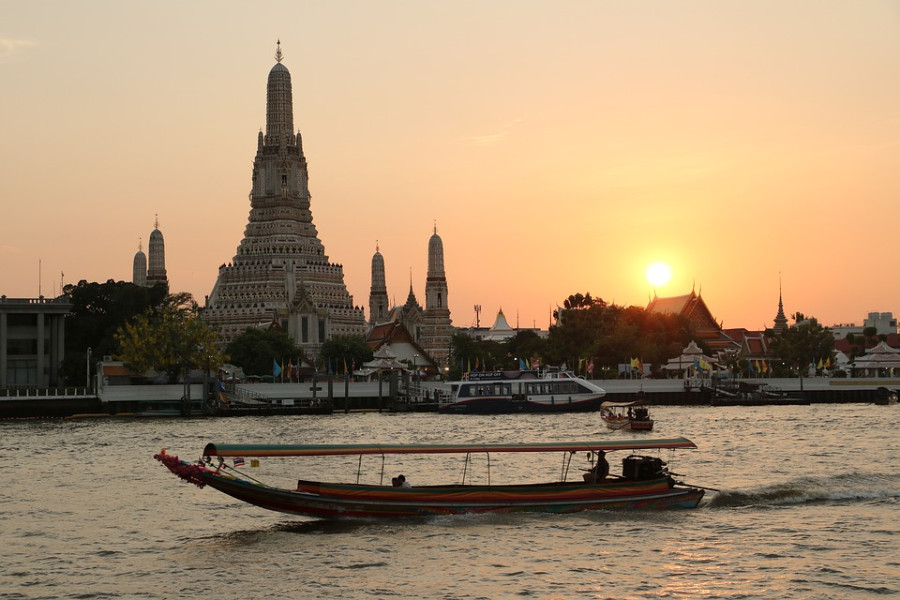
One of our most recent developments has been our project in Thailand, launched in 2024 at the Chao Phraya River in Bangkok. Also known as the River of Kings, the Chao Phraya River has deep cultural significance. From facilitating the rise of ancient Great Kingdoms, to providing vital access to trade routes, the Chao Phraya has helped to shape Thailand into the country it is today. Unfortunately, the Chao Phraya river is now one of the top 50 plastic emitting rivers in the world, carrying an estimated 4 million kilograms of plastic into the Gulf of Thailand every year.
Our Bangkok project
Phase 1: the HIPPO
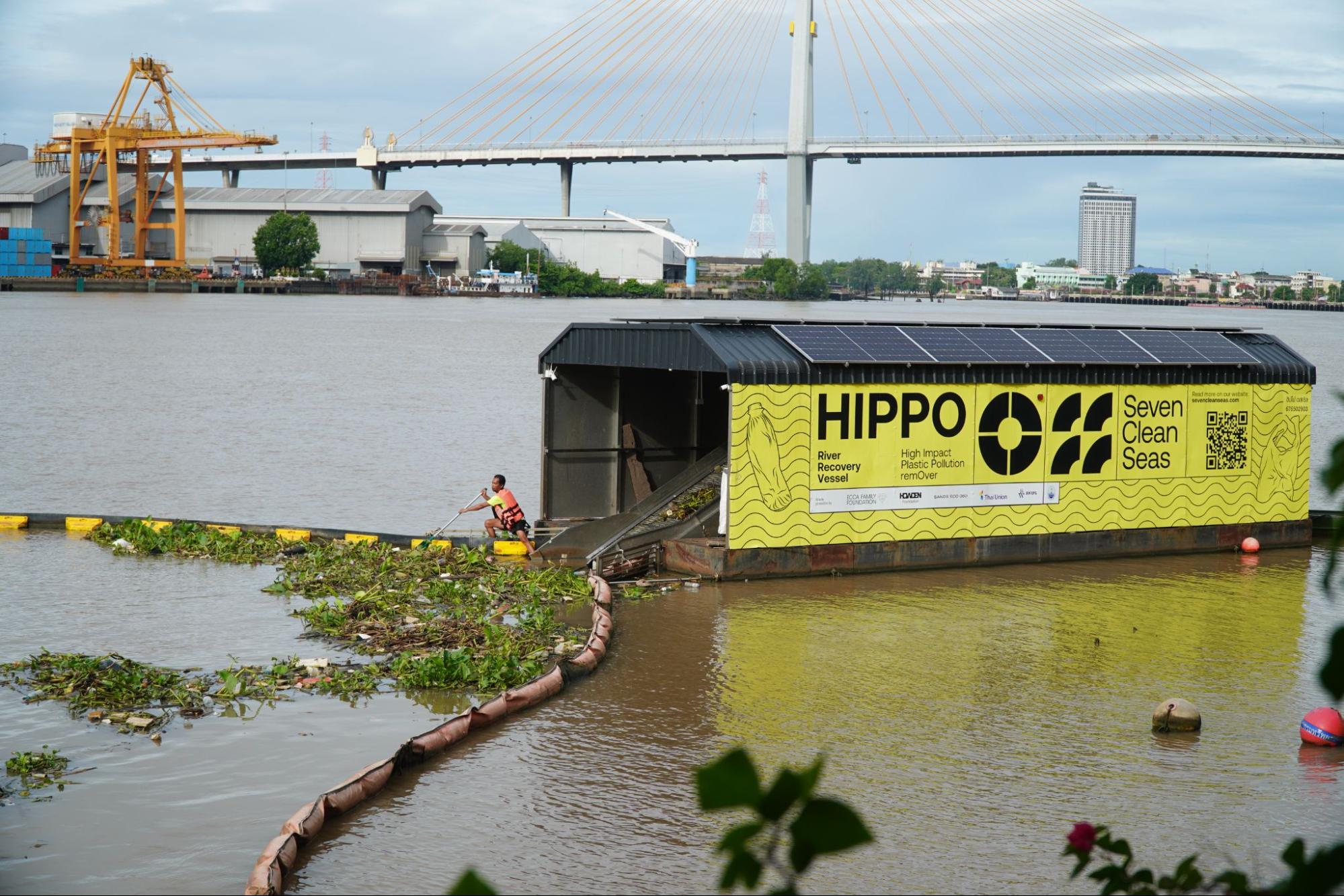
To address this issue, Seven Clean Seas collaborated with the Wat Chak Daeng Buddhist temple and developed the HIPPO (High Impact Plastic Pollution remOver), our solar-powered vessel that automatically collects river plastic using the natural flow of the river current. Located strategically on the bank of the Chao Phraya River to collect a high volume of plastic, the HIPPO has been intercepting plastic since August 2024.
Phase 2: mangrove expansion
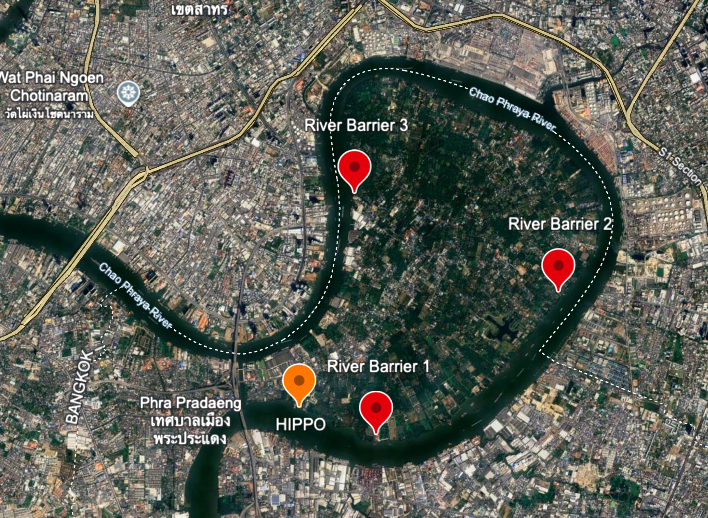
Moreover, the HIPPO is only Phase 1 of the full Thailand Project Plan. In Phase 2, which began in late 2025, we have significantly expanded our cleanup efforts in the mangrove area near the HIPPO by installing an MRF (materials recovery facility) to manage our waste. Three river barriers are planned to be installed in early 2026 around the Chao Phraya River to further supplement the HIPPO plastic waste collection.
For the first step of the mangrove expansion, the operations were set up, including site preparation and the MRF establishment, so thatwaste could be collected and properly treated on-site. Crew members were then recruited to collect plastic waste and received onboarding and training to ensure safety and efficiency when working in the river. Finally, and very importantly, the Thailand project went through an audit to receive an OBP (Ocean Bound Plastic) certification to be able to sell verified plastic credits that adhere to the official Zero Plastic Oceans social and environmental standards for plastic collection.
OBP certification and standards
Zero Plastic Oceans (ZPO) is an NGO dedicated to addressing the plastic pollution issue, specifically Ocean Bound Plastic - or plastic with a high risk of ending up in the ocean. They first noticed in 2019 that most plastic cleanup organisations only focused on collecting plastic pollution that was easy to recycle and sell. Meanwhile, the rest of the non-commercially recyclable (NCR) ocean plastic was never collected as they had no value and couldn’t cover the cost of collection. This left the abandoned OBP to continuously break down and pollute our oceans even further.
ZPO's solution was to develop OBP Certification programmes to help incentivise the collection of all types of OBP. For example, the Ocean Bound Plastic Neutrality certification subprogram ensures that NCR plastic waste has been ethically collected and managed, thus allowing the collectors to sell certified OBP plastic credits. Plastic credits are a type of transferable unit that corresponds to a specific quantity of plastic waste that has already been collected and treated as a result of a project activity, such as plastic waste collection through our HIPPO. For OBP Certification, each plastic credit corresponds to 1kg of OBP waste already collected. By purchasing plastic credits, organisations can make a positive environmental impact by funding the collection and management of ocean plastic pollution and offsetting their own plastic footprint.
The reason why an OBP certification is so significant is because their environmental and social standards are extremely rigorous, and rightfully so. The process to pass includes being audited by a third party and complying with all the standards for the Ocean Bound Plastic Neutrality certification, which include:
- No child labour
- Fair working conditions
- Fair payments to the waste pickers
- Adequate waste management
- Having a quality management system
- Respect of OBP collection criteria from the first level of collection
- Traceability of certified OBP all along its journey
- Traceability and certainty of issued plastic credits (OBP credits)
- Verification of plastic footprint determination and offsets execution
By passing the OBP neutrality certification process, Seven Clean Seas’ Thailand Project can now sell verified OBP plastic credits that are ethically collected and treated, and will indeed offset plastic footprints in a way that is tangible and traceable.
Why the OBP Neutrality Certification matters
For Seven Clean Seas, being OBP certified is an indication that expanding our projects in other countries is the right move, and should be pursued further as it is clearly possible to do so in a safe and responsible manner.
The certification also means that anybody who purchases our plastic credits can rest assured that the plastic waste corresponding to their credits was certainly collected (and would have polluted our oceans otherwise), every crew member was fairly compensated and working in safe conditions, and that collected plastic was properly managed afterwards in a way that is transparent and traceable.
With the commencement of Phase 2 and a successful OBP Neutrality certification, the mangrove expansion will continue as planned. Future goals are to install river barriers around the Chao Phraya River to supplement the HIPPO and significantly increase the volume of plastic collection, to continue collecting and managing plastic waste to create plastic credits, and to finalise the plastic collection system to maximise efficiency and standardise the process for future large-scale deployment. Though our Bangkok Project is the very first OBP Neutrality Certified project in Thailand, we hope that it just the start of many that will help restore the Chao Phraya River to a plastic-free future.