




.jpg)

Women often get blamed for many structural problems that occur. One social media post blamed women for the menstrual pads ending up in Indonesia’s rivers - just because women are the primary users. However, waste leaks into the environment for reasons far beyond this.
The increase in stigmatisation against women touches on a bigger issue, as plastic pollution is far more complex than individual or certain gender behaviours. People forget that a greater structural problem, such as inadequate waste management infrastructure, limited sanitation facilities, and restricted access to proper disposal options play a significant role.
The paradox is that despite all the blame, women are more vulnerable to plastic pollution’s side effects. A UNEP report found that women’s biology can lead to disproportionate impacts, especially during menstruation, pregnancy, and breastfeeding.
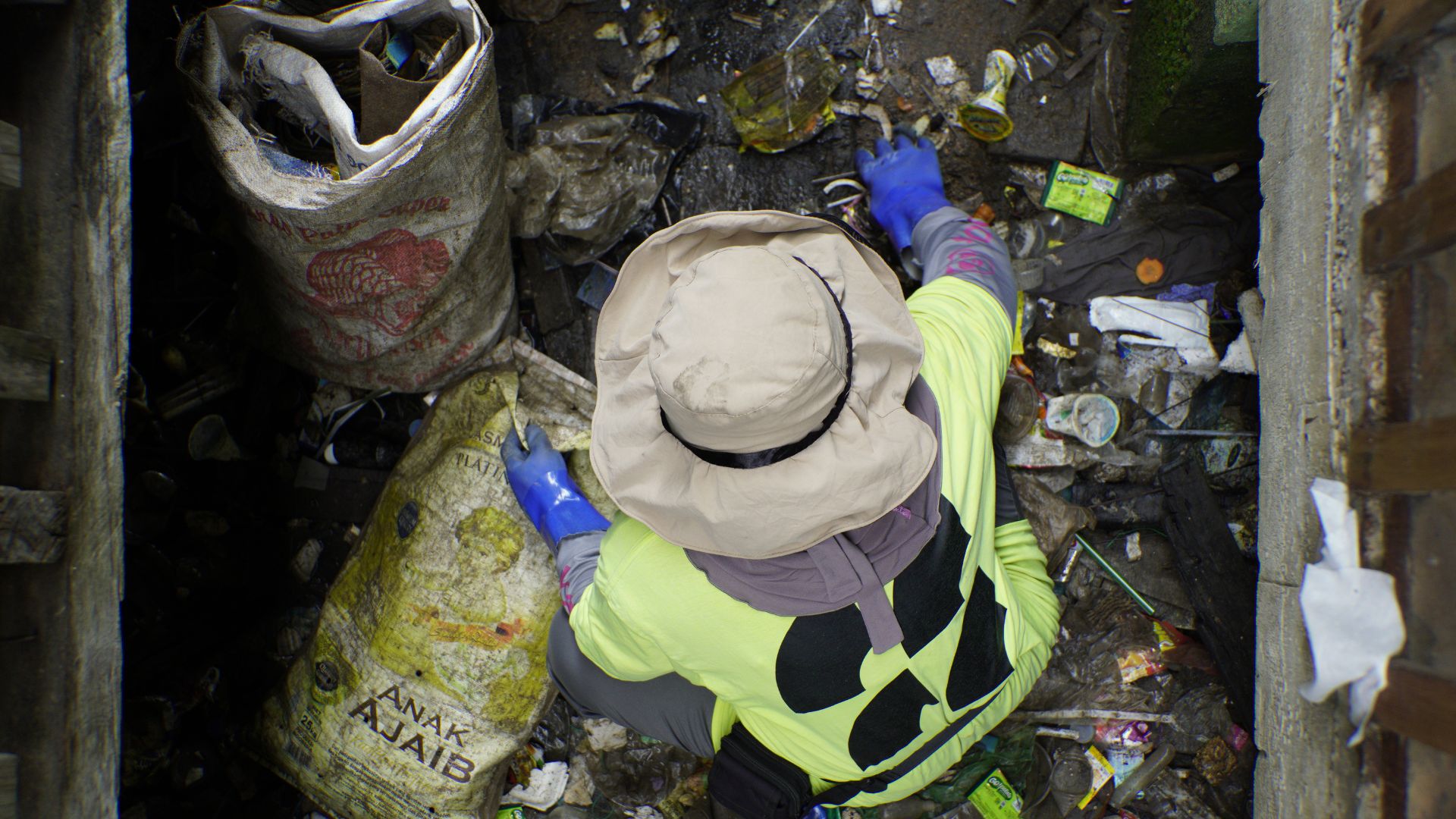
In countries like Indonesia, this vulnerability is exacerbated by occupational hazards. In the Bantar Gebang and Sumurbatu landfills, women waste pickers have reported miscarriages caused by the physical strain of lifting heavy loads or being struck by falling waste containers.
With all these added risks, why do women carry much of the blame? Do current solutions address these realities? And if gender does play a role in how plastic is used and managed, do we need to start thinking about solutions differently?
Blaming Women for A System’s Problem
One reason women are perceived as major contributors to plastic pollution is their role as the primary consumers of personal care products. Fortune Business Insights projected that the women's segment will dominate the market, with a share of 57.04% this year alone.
Many of these products rely heavily on plastic packaging, if not produced from plastic. Menstrual products are one of the clearest examples. Disposable sanitary pads can contain up to 90% plastic material. Over a lifetime, one person can use thousands of these, most of which end up in landfills or the environment when no proper disposal mechanism is in place.
Ironically, this is where the narration becomes misleading. People only view women as plastic consumers without realising they’re left with little-to-no other options. For many women in lower-income or underserved areas, alternatives are either too expensive, inaccessible, or simply not supported by existing waste systems. Organic, sustainable, and bulk goods (which reduce plastic) are often 20-30% more expensive than conventional, plastic-packaged alternatives.
Even basic disposal options are limited. In many parts of Southeast Asia, waste collection rates can fall below 50%, especially in rural or remote areas. On average, about half of waste remains mismanaged, making proper waste management difficult regardless of individual behaviour.
Women as A Key Solution
The upside to all this is that women also have a large influence in reducing plastic use. Studies show that women are key agents of change, often acting more environmentally responsibly than men and prioritising human health and the environment in their decision-making. Women lead household-level consumption and recycling decisions.
- Women lead household-level consumption and recycling decisions: Research in Southeast Asia found that women take on the primary burden of sorting household waste, with some studies indicating they bear responsibility for waste separation 20-95% of the time, compared to 0-12% for men.
- Women play a key role through informal collection: In India, Indonesia, the Philippines, and Vietnam, government-run formal solid waste management systems primarily direct waste - including plastic waste - to landfills or energy treatment plants. Most recycling, therefore, occurs through the informal economy, and women comprise the majority of the estimated 20 million informal waste collectors.
- Sustainability motivations: Women show higher pro-environmental attitudes, with a greater willingness to reduce plastic consumption regardless of social influence, whereas men's actions in this area are more often influenced by seeing others.

Current Solution Gaps
The Global Plastic Action Partnership has already acknowledged that the plastic crisis is not gender-neutral, but current solutions are still designed as if a single rule would affect everyone the same way. Some real cases have already shown us that we need a gender-based approach.
In 2021, Mexico City banned nonessential single-use plastics, including tampon applicators. The result was a shortage of tampons and rising prices, which disproportionately affected low-income women. When it comes to Personal Protective Equipment (PPE), most are always designed for men's sizes. For a woman waste picker, an oversized boot or heavy glove is both uncomfortable and dangerous.
And while women remain the backbone of informal waste collection, they still experience inequality, earning less than men for similar work. In Indonesia’s Cipayung landfill, women earn anywhere from USD 9 to USD 20 per week, while men can earn up to USD 30.
At the same time, women carry a double burden. On average, Indonesian women waste pickers spend about 5.6 hours a day - 30 minutes more than men - on unpaid domestic work. When the sector becomes more formalised, women are often the first to be pushed out, either because the roles are seen as “technical” or because the working hours don’t accommodate childcare.
So, What Should We Do?
Conversations around gender-responsive plastic solutions are not new. Organizations like Deutsche Gesellschaft für Internationale Zusammenarbeit (GIZ) have already outlined practical steps across the plastic lifecycle, from resource extraction to waste management.
The common message behind these recommendations is simple: plastic policies and waste systems cannot be designed as if everyone experiences them the same way.
This means creating waste systems that are easier to access, improving working conditions for informal waste workers, designing PPE that fits women safely, and ensuring women are included in decision-making processes rather than being treated only as consumers.
It also means recognizing that women are already playing a major role in plastic reduction and waste recovery efforts. Their current contributions are often undervalued, unsupported, or overlooked entirely.
At the same time, these conversations cannot stay only at the policy level.

At Seven Clean Seas, women within our recovery ecosystem have shared how improved income opportunities, safer working conditions, and increased awareness around plastic waste have positively impacted not only their livelihoods but also their families and communities.
One of them is Susi, who previously worked as a teacher before joining Seven Clean Seas. Beyond providing more financial stability, her work also changed how she viewed plastic waste and environmental responsibility in her daily life.
Stories like this remind us that gender-responsive solutions are not about creating “special treatment” but about building systems that recognize different realities and allow more people to participate safely and meaningfully in solving a global challenge like plastic pollution.
To learn more about the people behind our recovery ecosystem, explore our latest Annual Impact Report for 2025.